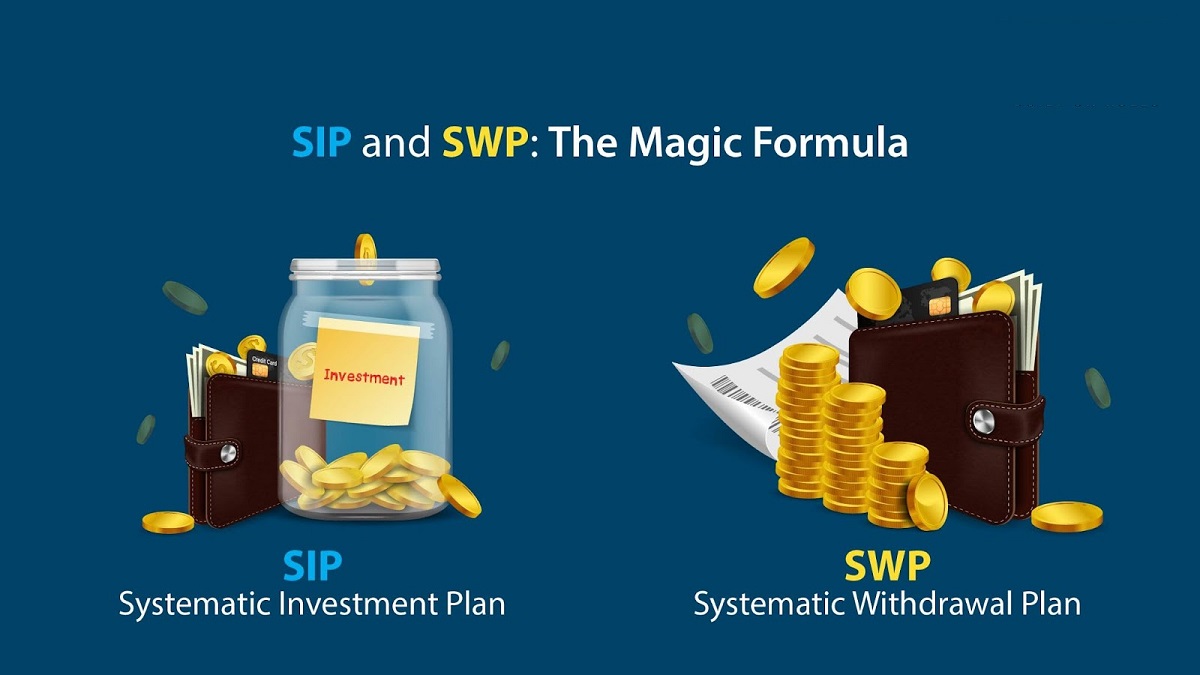
When it comes to mutual fund investing, most people think in silos. They either focus on building wealth through a Systematic Investment Plan (SIP) or drawing income using a Systematic Withdrawal Plan (SWP). In reality, smart financial planning connects both. SIP and SWP are two sides of the same coin—one helps you accumulate money, the other helps you use it efficiently.
Understanding how to plan SIP contributions and SWP withdrawals together, with the help of simple calculators, can make your long-term financial journey far more predictable and stress-free.
Understanding SIP and SWP in Simple Terms
A SIP allows you to invest a fixed amount at regular intervals—monthly, quarterly, or yearly—into a mutual fund. It works best during your earning years, helping you benefit from rupee cost averaging, compounding, and disciplined investing.
An SWP, on the other hand, lets you withdraw a fixed amount at regular intervals from your mutual fund investment. It is commonly used during retirement or when you need regular income without redeeming the entire investment at once.
Instead of treating them separately, a combined SIP–SWP strategy helps ensure that the money you build today can support the lifestyle you want tomorrow.
Why Planning SIP and SWP Together Makes Sense
Many investors aggressively invest through SIPs without estimating how much income their corpus can realistically generate later. Others start SWPs without understanding how long their money will last.
Planning both together helps you answer key questions:
- How much should I invest monthly to reach my target corpus?
- What withdrawal amount is sustainable without exhausting my investment too early?
- Can my investment growth offset withdrawals and inflation?
This is where calculators play a crucial role.
A Simple Calculator-Led Approach
You don’t need complex spreadsheets or advanced financial models. A basic SIP calculator and an SWP calculator can give you surprisingly clear insights.
Step 1: Estimate Your Future Income Needs
Start by deciding how much monthly income you will need in the future. For example, you may want ₹50,000 per month after retirement. Adjust this amount for inflation based on the number of years left.
Step 2: Use an SWP Calculator
An SWP calculator helps you determine how long your corpus will last based on:
- Total investment amount
- Expected rate of return
- Monthly withdrawal amount
This step shows you the required corpus to support your withdrawals sustainably.
Step 3: Work Backward Using a SIP Calculator
Once you know the required corpus, use a SIP calculator to find out:
- How much you need to invest monthly
- For how many years
- At an assumed rate of return
This reverse planning ensures your SIP amount is aligned with your future SWP needs.
Example to Make It Clear
Suppose you want a retirement income of ₹50,000 per month for 25 years. An SWP calculator may show that you need a corpus of around ₹1.5–2 crore, depending on returns.
Using a SIP calculator, you may find that investing ₹15,000–₹20,000 per month for 25–30 years could help you reach that target. Suddenly, the plan becomes tangible and actionable.
Common Mistakes to Avoid
- Ignoring inflation: Fixed withdrawal amounts may lose purchasing power over time.
- Overestimating returns: Conservative assumptions lead to safer plans.
- Starting SWP too early: This can reduce compounding benefits.
- No review: SIP and SWP plans should be reviewed periodically as income, expenses, and goals change.
Final Thoughts
SIP and SWP are not competing strategies—they are complementary. SIP helps you create wealth, while SWP helps you use that wealth efficiently. When planned together using simple calculators, they provide clarity, confidence, and control over your financial future.
By linking today’s investments with tomorrow’s withdrawals, you move from guesswork to goal-based planning—making your money work for you at every stage of life.